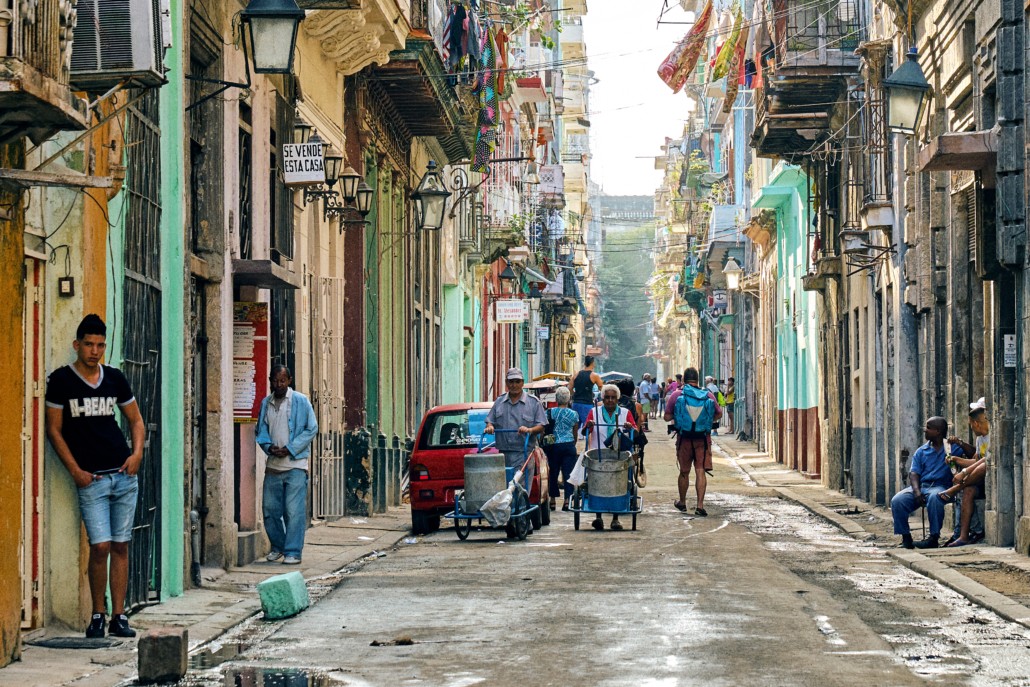
The country of Cuba is facing a large-scale food crisis, after Venezuela discontinued the aid to the nation of the small island. Venezuela has long been a lifeline of support for the sanctions struck country, ruled by the communist government, that is intense relations with the US.
Moreover, the outbreak of COVID-19 has caused a shortage of cash carriers, commonly called “mules” (or “mulas” in Spanish), who travel to foreign countries to bring currency and certain goods. There are more than 50,000 Cubans who make their living as mules. They account for around half of the remittances in the Cuban economy. Since COVID-19, among other things, the disruption of the supply chain of these vital cash carries caused serious economic hardship to Cuba.
The Communist Party urged the society to start plating and growing food in every free space they possess.
In order to avoid the economic disaster, a growing number of Cubans are resorting to Bitcoin and other cryptocurrencies. For example, a trader based in San José de las Lajas offers bitcoin cash (BCH) “without limits” for payments through Western Union on the peer-to-peer exchange Local.Bitcoin.com. It is also known that on the platform there are traders based in Havana and Holguin. Furthermore, a popular channel in Telegram named “Cubacripto” hosts thousands of Cubans, where users gather to discuss or trade cryptocurrencies.
In September 2019 Reuters was already reporting that many Cubans are skirting US sanctions by acquiring cryptocurrencies so they can shop online and send funds.
In late April 2020, the Cuban entrepreneur Mario Mazzola started Cuba’s first peer-to-peer exchange for Bitcoin qbita.org. Mazzola revealed that Cubans find most other platforms to restrictive for them and users from Cuba sometimes get geo-blocked by them.
Mazzola explained his standpoint on cryptocurrencies by stating that in the future fewer and fewer people will be engaging in crypto just to make some easy money. More people will be using Bitcoin for what it was made for – the freedom to have total control over your funds and move money as you please, he argues.